
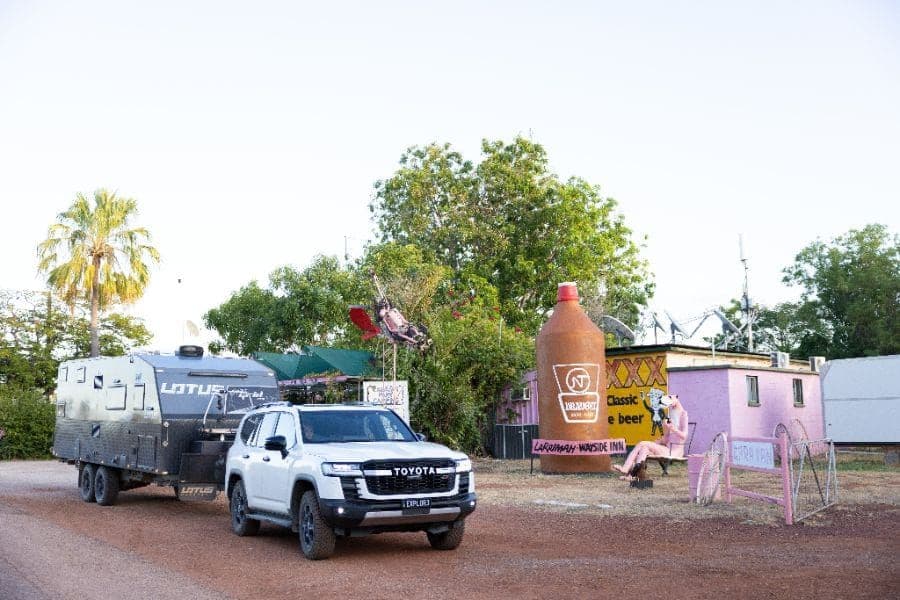
Four common caravanning myths busted
If you have ever been on a caravanning holiday, you will no doubt have encountered any number of urban caravanning myths and tall tales about life on the road — as well as regulations, and supposed ways around them. Here we put four of the most popular ones we’ve heard to the test.
Myth 1: Police are targeting caravanners using non-load-rated D-shackles
Rumours about specific D-shackle requirements being enforced by police have circulated for some time. In fact, there is currently no regulation requiring shackles used on trailer safety chains to comply with the Australian Standard. Shackles must, however, be suitable to prevent complete trailer detachment should your trailer come off its tow ball — and it is recommended that a shackle meeting AS 2741-2002 be used to secure rated safety chains up to 3500kg capacity.
Myth 2: "Off-road" suspension and tyres mean my van is built for off-road
Just because your caravan has "off-road suspension" and "tyres" doesn’t necessarily mean the rig is designed for off-road use. If you are planning some serious off-road action, do your homework and buy a product specifically designed for that purpose.
Myth 3: Weight doesn’t matter — I have a big 4WD that tows it fine
Towing a caravan that is overweight or loaded incorrectly is not only dangerous but illegal, and if you have an accident under those conditions your insurance cover may be null and void. Vehicles with a GVM under 4.5 tonnes can tow a loaded trailer with an ATM up to the lesser of the towbar rating or the manufacturer’s maximum towing mass (including tow-ball download). Where no data is specified, the vehicle may legally tow a braked trailer up to 1.5 times its own unladen mass. As a rule, load heavy items as low and as close to the axle line as possible, and keep only light items in overhead compartments.
Myth 4: 15-amp leads are impractical — just file down the earth pin
It is illegal to directly connect your RV’s 15-amp electrical system to a 10-amp domestic socket, and doing so will invalidate your insurance. RVs are designed to be connected to dedicated 15A outlets like those provided in caravan parks. The appliances inside may individually draw below 10A, but the current draw climbs quickly as you switch on the air-conditioner, fridge, hairdryer, lights and so on.
This information is intended to raise awareness of issues to consider when towing. If in doubt, talk to an accredited dealer or qualified specialist before you hit the road.