
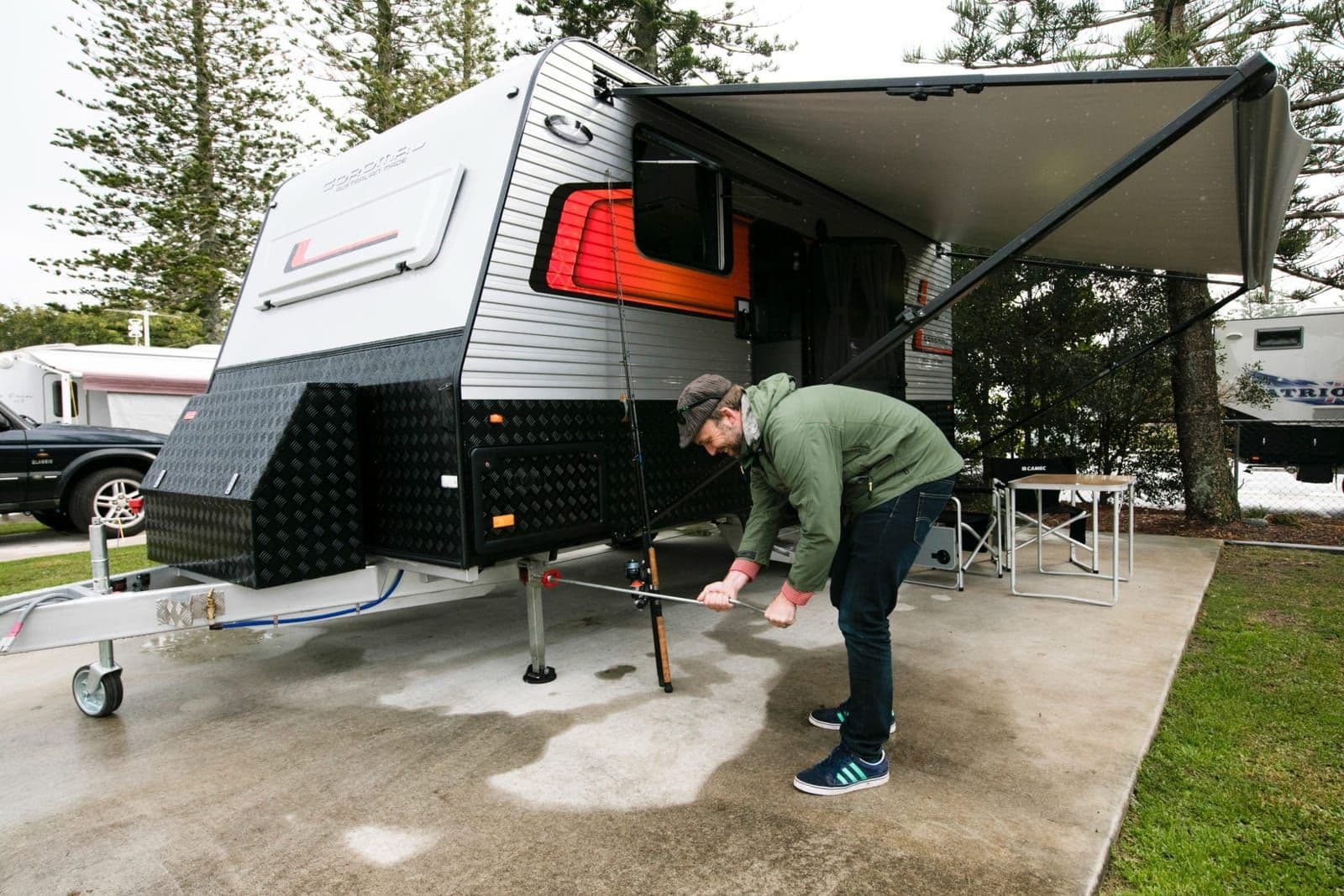
Understanding caravan dimensions
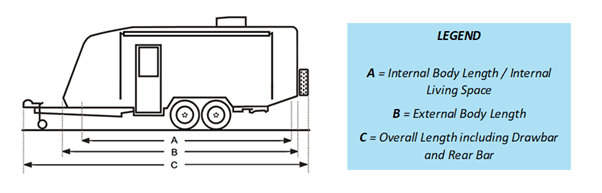
Caravan size is usually described by body length. A "19-foot caravan", for example, generally means the body is around 19 feet (5.8m) long, excluding the drawbar and rear bumper. Body length can be quoted as either the internal living space or the external body — so it is worth checking which one a dealer means.
Body length is a useful reference for visualising living space and comparing models, and it comes up constantly in model names and sales conversations. But it is not the whole story.
Overall length
Overall length is measured from the front of the coupling to the rear of anything mounted behind the van — bumper bars, spare wheels, bike racks and so on. Because drawbars and rear equipment vary, two vans with the same body length can have quite different overall lengths.
This matters more than people expect. Overall length determines whether a van fits your driveway, garage or carport (don’t forget height and doorway clearance), and whether it suits a given caravan-park site. The combined length of your car plus van is also requested for ferry bookings — and is a good gauge of how comfortable a rig will be to tow.
Overall width
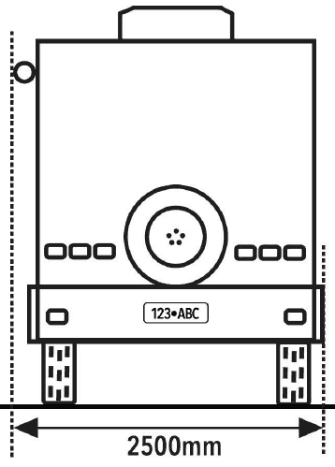
A trailer must not exceed 2500mm in overall width on the road. That width is measured across the body including mounted equipment and fixings — wheel guards, hot-water-service covers, racks and awnings — but excluding signalling devices and side-mounted lamps.
Remember that your "camp" footprint is bigger than your "road" footprint. Side awnings can almost double the width once rolled out, and slide-outs or fold-out sections add space again when you set up.